Lingerie Lead Time: How Long Does Production in China Actually Take?
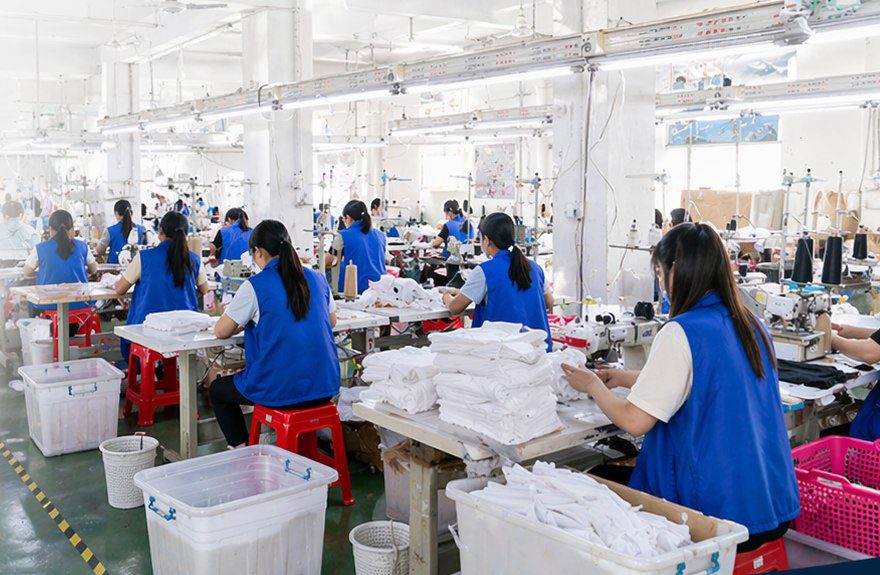
Lead time is one of the most misunderstood aspects of sourcing from China. Buyers often arrive at negotiations with a delivery date in mind, only to discover that the realistic timeline is two to three times longer than expected. This guide breaks down where the time actually goes — from placing an order to goods leaving the factory — and what you can do to compress it without cutting corners.
The Four Stages of Lingerie Production Lead Time
Production lead time is not a single number. It is the sum of four sequential stages, each with its own timeline and dependencies. Compressing total lead time requires understanding which stages can overlap and which cannot.
| Stage | Typical Duration | What Happens |
|---|---|---|
| 1. Pre-production confirmation | 3 – 7 days | Order confirmation, deposit payment, final spec sign-off, fabric and trim sourcing |
| 2. Material procurement | 7 – 21 days | Factory orders fabrics, lace, underwires, elastic, clasps, and packaging materials from suppliers |
| 3. Bulk production | 15 – 30 days | Cutting, sewing, quality inspection, packaging |
| 4. Pre-shipment inspection and export | 3 – 7 days | Final QC, packing, customs documentation, freight booking |
Total: 28 to 65 days from order confirmation to goods ready for shipment. For most standard orders, the realistic window is 35 to 45 days.
Why Material Procurement Is the Biggest Variable
Most delays in lingerie production trace back to material procurement, not sewing. Fabrics — particularly specialty knits, lace, and performance fabrics — often have their own MOQs and lead times from mills. When a buyer requires a specific fabric that the factory does not stock, the factory must place a mill order and wait for delivery before cutting can begin.
Common material procurement timelines:
- In-stock fabrics at the factory: 0 – 3 days to pull and inspect
- Standard fabrics from a local supplier: 5 – 10 days
- Specialty or imported fabrics: 14 – 28 days
- Custom-dyed or custom-developed fabrics: 21 – 45 days
This is why factories ask about fabric requirements before confirming a lead time. An order that looks straightforward on paper can be delayed three weeks simply because the required fabric color is not in stock at the mill.
Lead Time by Order Type
| Order Type | Typical Lead Time | Key Driver |
|---|---|---|
| ODM (from factory’s existing range) | 25 – 35 days | Faster because materials are often in stock and patterns already exist |
| OEM with approved sample (repeat order) | 30 – 40 days | Faster because patterns and material sources are established |
| OEM first bulk (after sample approval) | 35 – 50 days | Standard timeline including material sourcing |
| OEM with custom fabric development | 50 – 75 days | Extended by fabric mill lead time |
| Rush order (limited styles, in-stock materials) | 15 – 25 days | Requires factory capacity allocation and premium pricing |
Seasonal Factors That Extend Lead Time
Chinese manufacturing follows a predictable seasonal pattern that affects lead times for all buyers. Planning around these windows prevents the most common sourcing delays.
- Chinese New Year (January – February): Factories close for 10 to 15 days. Production effectively stops for 3 to 4 weeks including pre-holiday wind-down. Orders placed in December typically do not ship until late February or March.
- Golden Week (October 1 – 7): One-week closure. Orders placed in late September may slip by 7 to 10 days.
- Peak export season (August – October): Factories are running at capacity for Western holiday orders. New buyers may face longer queues for production slots.
- Factory hiring disruptions (post-CNY, March – April): Worker retention after Chinese New Year can temporarily reduce factory capacity as new staff are trained.
How to Realistically Compress Lead Time
There are legitimate ways to reduce lead time without asking the factory to cut corners on quality:
Choose styles that use in-stock materials
Selecting designs from a factory’s ODM range, or confirming that your required fabrics are already in the factory’s stock, eliminates the longest single variable in lead time. Ask for a material stock list before finalizing your order specifications.
Confirm materials before placing the order
Do not assume material availability. Ask the factory to confirm in writing that all required fabrics and trims are in stock or have confirmed delivery dates before you pay your deposit. This turns “35 to 45 days” from a guess into a commitment.
Overlap sample approval with material procurement
On OEM orders, factories can begin sourcing materials during the sample revision stage rather than waiting for final sample approval. This requires explicit agreement with the factory and carries a small risk if major design changes are required, but it can save 7 to 14 days on total lead time.
Pay deposits promptly
Production does not begin until the deposit is received and confirmed. A 48-hour delay in transferring the deposit is a 48-hour delay in production — especially if the factory needs to place material orders before cutting can start.
Limit style and color variety on first orders
Each additional style or colorway requires separate material sourcing, potentially from different suppliers. First orders with three styles in two colors are faster to produce than first orders with ten styles in five colors, even at the same total unit count.
What TELIGE’s Lead Times Look Like in Practice
For standard OEM orders with confirmed materials, TELIGE’s bulk production lead time is 30 to 45 days from deposit confirmation. For ODM orders from our existing product range, we typically ship within 25 to 35 days. We provide a production schedule with key milestone dates at the time of order confirmation and send weekly progress updates throughout production.
If you have a specific delivery deadline, share it at the inquiry stage — not after sample approval. This gives us time to confirm whether your target date is achievable before you commit to the order.
The Bottom Line
A realistic lingerie production lead time from China is 35 to 45 days for standard OEM orders. The biggest variable is material procurement, not sewing speed. Buyers who confirm material availability upfront, pay deposits promptly, and plan around Chinese holidays consistently hit their delivery targets. Buyers who treat lead time as a negotiating point — rather than a production reality — consistently miss them.
To get an accurate lead time estimate for your specific order, contact TELIGE with your product requirements and target delivery date.
Looking for a Reliable Manufacturing Partner?
Get a free quote for your next intimate apparel order. Our team is ready to help.
Get a Quote