Fabrication de soutiens-gorge grandes tailles : les erreurs courantes des marques et comment les corriger
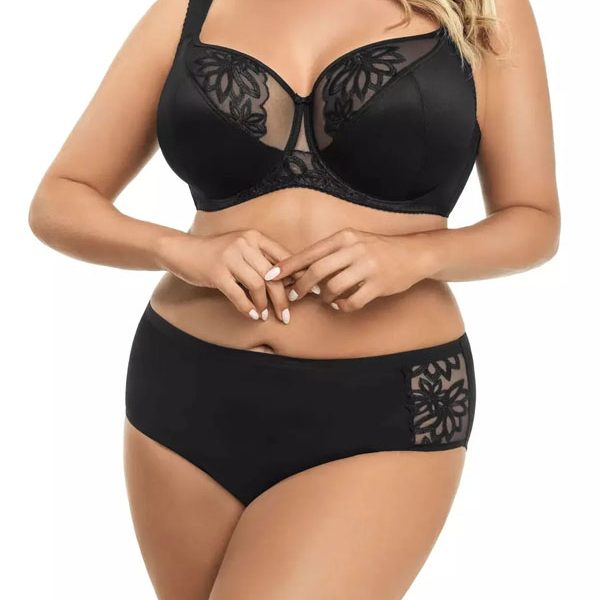
Voici une chose que la plupart des jeunes entreprises de lingerie ne réalisent qu'après avoir épuisé leur première production : les soutiens-gorge grandes tailles ne sont pas simplement des soutiens-gorge classiques en plus grandes tailles.
Nous fabriquons des soutiens-gorge dans notre usine de Shantou depuis 2003. Et l'erreur numéro un que nous constatons chez les nouvelles marques qui arrivent sur le marché des grandes tailles ? Elles prennent leur patron de soutien-gorge standard, l'agrandissent à 30% et s'arrêtent là.
Cela ne fonctionne pas. Voici pourquoi, et ce qu'il faut faire à la place.
Le marché des grandes tailles est immense — et sous-exploité.
Petit retour à la réalité.
Aux États-Unis, 681 % des femmes portent une taille 44 ou plus. Au Royaume-Uni, la taille moyenne de soutien-gorge est désormais de 36DD. Le marché mondial de la lingerie grande taille a atteint 12,4 milliards de dollars en 2024 et continue de croître.
Pourtant, entrez dans la plupart des boutiques de lingerie et comptez le nombre de modèles disponibles au-delà du 38D. Cinq, tout au plus ? Généralement en noir, beige ou blanc. Avec un peu de chance, un violet triste.
Les marques sont conscientes de ce manque. C'est pourquoi nous recevons aujourd'hui plus de demandes concernant la fabrication de soutiens-gorge grandes tailles que pour toute autre catégorie. Mais savoir que le marché existe et fabriquer un bon produit adapté sont deux choses bien différentes.
Pourquoi la mise à l'échelle des modèles standard échoue
Un soutien-gorge 34B et un soutien-gorge 44G sont soumis à des lois physiques complètement différentes.
La gravité, la répartition du poids, la tension des épaules, le maintien du soutien-gorge : tout change avec la taille. Un soutien-gorge adapté à un 34B peut être totalement inadapté à un 44G, même si toutes les mesures étaient proportionnellement mises à l’échelle.
Les problèmes spécifiques que nous constatons :
Le groupe arrive en voiture. Le problème le plus fréquent : pour les grandes tailles, c’est la bande qui supporte la majeure partie du poids (et non les bretelles, contrairement à ce que l’on croit souvent). Une bande élastique standard qui convient parfaitement aux tailles 34-36 se détendra et remontera en quelques heures seulement pour les tailles 42-46. Il vous faut des bandes plus larges (nous utilisons un minimum de 7,5 cm pour les tailles 40 et plus) et un élastique plus résistant avec une meilleure élasticité.
Les sangles s'enfoncent. Les bretelles standard de 1,5 cm exercent une pression sur les poitrines généreuses. Nous sommes passés à des bretelles rembourrées de 2,5 cm pour notre gamme grandes tailles et avons ainsi réduit de 601 à 30 % les réclamations liées aux bretelles. Ce n'est pas une exagération : nous avons analysé les retours auprès de trois marques partenaires pendant 12 mois.
Gore ne change pas de tactique. L'entre-seins (la partie centrale entre les bonnets) doit reposer à plat contre la poitrine. Sur les soutiens-gorge grandes tailles confectionnés à partir de patrons agrandis, il flotte. Cela signifie que les bonnets ne sont pas correctement séparés et que le maintien est compromis. La solution consiste à ajuster l'angle et la largeur de l'entre-seins indépendamment de la taille des bonnets.
Les armatures piquent. Les armatures plus longues se plient différemment sous la tension. Leurs extrémités se déplacent vers l'aisselle. Pour les tailles 38 et plus, nous utilisons des gaines renforcées avec des embouts en silicone afin d'éviter ce problème. Cela coûte environ $0,15 de plus par unité. Un investissement rentable grâce aux retours évités.
À quoi ressemble une bonne confection pour les grandes tailles ?
Nous avons perfectionné nos patrons grandes tailles au cours de plus de 15 ans de production. Voici le résultat :
Construction de la tasse en trois parties. Pas en deux parties. Un soutien-gorge en trois parties offre une meilleure forme et répartit la tension sur davantage de coutures. Le panneau supérieur contrôle le galbe, le panneau latéral la largeur et le panneau inférieur le maintien. Chaque élément est réglable indépendamment.
Arrosage latéral. La plupart des soutiens-gorge classiques n'en ont pas besoin. Les soutiens-gorge grandes tailles, en revanche, en sont absolument équipés. Nous insérons des baleines souples dans les empiècements latéraux à partir du 38D. Cela empêche le soutien-gorge de se plier ou de s'affaisser sous les aisselles et assure une bonne tenue du bonnet tout au long de la journée.
Panneau arrière en maille Power Mesh. Oubliez le satin ou le coton classique pour le dos. Le power mesh (généralement un mélange nylon/élasthanne, 70/30) offre un maintien ferme sans volume superflu. Respirant et extensible juste ce qu'il faut pour un confort optimal, il reprend sa forme après lavage. Notre gamme grandes tailles utilise au minimum 4 agrafes, et 5 agrafes pour les bonnets F et plus.
Modèle dos justaucorps ou dos en U. Les dos droits classiques ont tendance à se courber vers l'extérieur sur les morphologies plus fortes. Un dos en U ou un dos type justaucorps ancre la bande plus bas et répartit la force de traction de façon plus uniforme.
Appareils sans fil grande taille : c’est possible, mais délicat
Le marché réclame à cor et à cri des soutiens-gorge sans armatures pour grandes tailles. Toutes les marques veulent en proposer.
Voici le défi technique : sans armature, on perd l’élément structurel principal qui définit la forme du bonnet et sépare les tissus mammaires. Pour les bonnets AC, pas de problème : la mousse moulée ou le tissu collé suffisent. Pour les bonnets D et plus, il faut une solution plus élaborée.
Ce qui fonctionne selon nos résultats :
Mousse à densité graduée. Plus épaisse à la base, plus fine en haut, cette mousse crée un effet d'étagère naturel sans fil métallique. Nous nous approvisionnons auprès de deux fournisseurs de mousse, l'un à Dongguan, l'autre à Shantou. Le surcoût par rapport à la mousse standard est d'environ 201 TP3T, mais la différence de performance est significative.
Construction à élingue interne. Un panneau de soutien interne, faisant office de hamac, supporte le poids tandis que le bonnet extérieur lui donne sa forme. Plus complexe à fabriquer (car il double la structure du bonnet), ce système offre un maintien similaire à celui d'un soutien-gorge à armatures, sans armatures.
Large bande élastique sous la poitrine. 10 cm minimum. Cette partie constitue votre structure de soutien principale. Elle doit être suffisamment ferme pour rester en place, mais assez extensible pour laisser respirer le tissu. Nous utilisons un élastique sur mesure avec un coefficient de récupération de 40% (ce qui signifie qu'il reprend sa forme initiale à 60%). Un élastique standard a un coefficient de récupération d'environ 25%.
La question de la gamme de tailles
Les nouvelles marques se demandent toujours : “ Quelles tailles devons-nous proposer ? ”
Commencez ici : 36C à 48DDD (F).
Cela couvre environ 80% du marché des grandes tailles avec une complexité de références gérable. On parle d'environ 30 à 35 combinaisons de tailles.
N'essayez pas de proposer plus de 50 tailles dès le premier jour. Nous avons vu des marques commander 60 tailles, répartir leurs quantités minimales de commande sur l'ensemble de ces tailles et se retrouver avec des problèmes de stock pour les tailles les plus demandées. Commencez par une taille spécifique, analysez vos données de vente après 90 jours, puis élargissez votre gamme là où la demande se manifeste.
À titre de référence, voici nos tailles les plus vendues chez tous nos partenaires de marques grandes tailles :
- 38DD
- 40D
- 42DD
- 38D
- 44D
- Gamme de tailles cibles
- Préférences en matière de tissus (ou laissez-nous vous recommander)
- Détails de construction (avec ou sans fil, nombre de crochets, style de sangle)
- Images de référence du style que vous souhaitez
- Couleurs Pantone
- exigences en matière d'étiquetage et d'emballage
Si votre budget est limité, ces cinq tailles à elles seules couvriront une part surprenante de la demande.
MOQ et réalité des coûts
Parlons chiffres, car c'est là que les marques s'engagent ou se retirent.
Quantité minimale de commande standard pour les soutiens-gorge grandes tailles : Entre 300 et 500 pièces par modèle et par couleur. Certaines usines exigent un minimum de plus de 1 000 pièces. Nous commençons à 300 pièces car nous avons en stock toute l’année les tissus et composants essentiels pour les grandes tailles.
Fourchette de coût unitaire : De $3.50 à $9.00 selon le modèle. Une brassière sans armatures basique en grande taille se situe dans la fourchette basse. Un soutien-gorge à armatures entièrement baleiné, avec bonnets en trois parties et dos en maille gainante, se situe dans la fourchette haute.
Coût de l'échantillon : $50-80 par modèle. Le développement des échantillons prend 10 à 15 jours. Nous recommandons toujours de commander deux séries d'échantillons : une première pour vérifier la coupe, et une seconde pour confirmer les corrections.
Coût de la notation : Si vous nous fournissez un patron de base en une seule taille, nous le déclinons sur toute votre gamme de tailles pour un tarif de $200 à $400 par modèle. Si vous souhaitez que nous développions le patron à partir d'un dossier technique, le tarif est de $300 à $500. Ces coûts sont généralement déduits de votre première commande de production.
Que faut-il envoyer à votre usine ?
Si vous êtes prêt à démarrer la production, voici ce dont nous avons besoin de votre part :
Un kit technique. Pas besoin de quelque chose de sophistiqué. Il devrait inclure :
Pas de dossier technique ? Pas de problème. Nous proposons des services ODM : apportez-nous un concept ou même un simple échantillon concurrent, et notre équipe de conception se chargera d’élaborer les spécifications techniques.
En résumé
Les grandes tailles ne sont plus un marché de niche. C'est un segment de marché essentiel que la plupart des marques de lingerie sous-estiment. Celles qui proposent des modèles de qualité – soutien-gorge adapté, bonnets en trois parties, bretelles rembourrées, baleines latérales – fidélisent rapidement leur clientèle, car les femmes rondes recherchent désespérément des soutiens-gorge qui leur vont vraiment.
Nous fabriquons des soutiens-gorge grandes tailles pour des marques aux États-Unis, en Europe, en Australie et en Asie du Sud-Est. Si vous souhaitez développer ou améliorer votre gamme grandes tailles, nous mettons à votre service plus de 20 ans d'expérience en conception de patrons et en production.
N'hésitez pas à nous contacter pour recevoir des échantillons — nous vous enverrons nos modèles grandes tailles les plus vendus afin que vous puissiez constater par vous-même leur qualité de fabrication.
Prête à développer votre ligne grandes tailles ? Contactez TELIGE pour discuter de vos besoins, ou consultez notre gamme de produits pour voir ce que nous fabriquons.
Vous recherchez un partenaire de fabrication fiable ?
Obtenez un devis gratuit pour votre prochaine commande de lingerie. Notre équipe est à votre disposition.
Obtenir un devis